
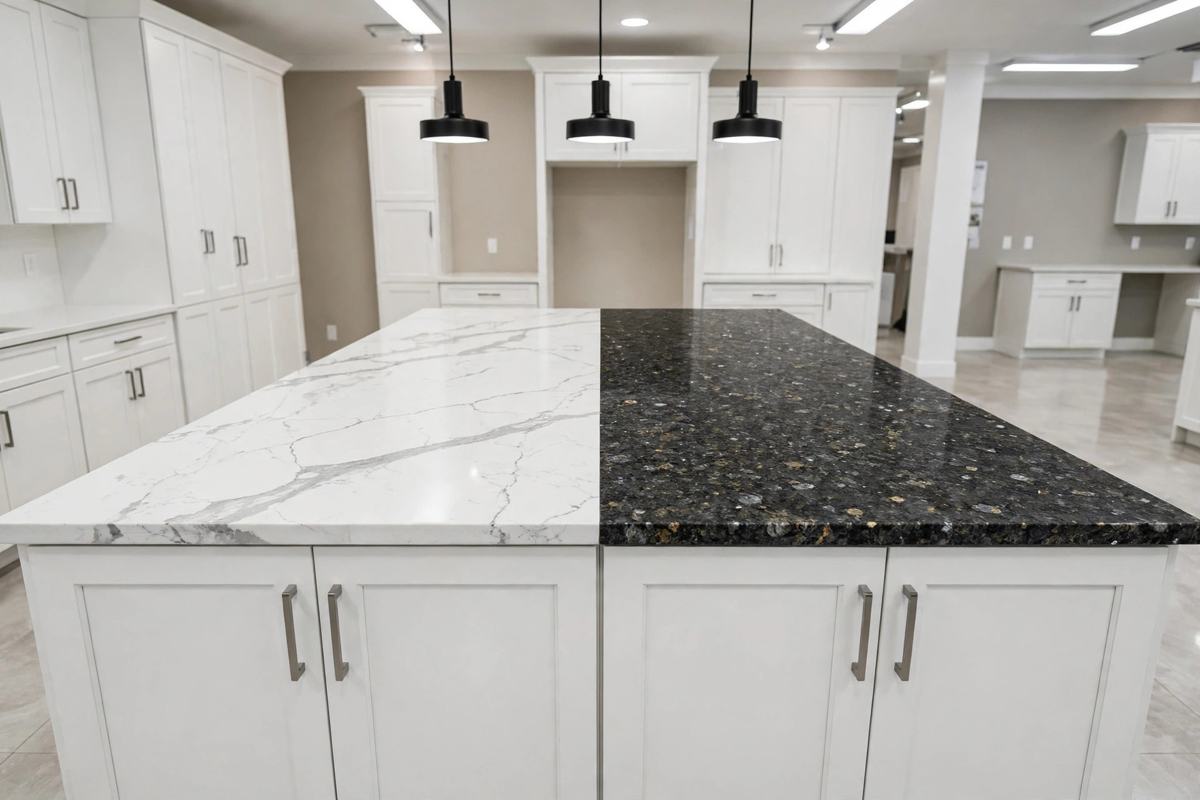
 It is the most common countertop question in multifamily development: quartz or granite? Both are proven in U.S. rental kitchens, but they behave differently in maintenance, appearance, and supply. This comparison gives project teams a clear way to choose — and shows why many end up specifying both.
Quartz is engineered, so its color and pattern repeat almost exactly from slab to slab. Across 300 identical units, that consistency keeps every kitchen looking like the model unit. Granite is natural stone: each slab has its own movement and tone, which looks rich and authentic but varies between units. If your leasing story depends on identical finishes, quartz wins. If it depends on a natural, premium feel, granite wins.
Quartz is non-porous and never needs sealing; tenants can clean it with ordinary products, and it resists stains from coffee, wine, and oils. Granite needs sealing at installation and periodically afterwards, and acidic spills should be wiped promptly. For large portfolios, quartz's zero-sealing schedule is a real operating saving, while granite's upkeep is manageable where on-site teams already run a stone-care routine.
Granite is harder and shrugs off hot pans placed directly on the surface. Quartz resists staining and chipping better and does not harbor bacteria in pores, but its resin content means very hot pans should use a trivet. In practice, both survive tenant use well; damage patterns differ more than damage rates. A multifamily cabinet package should state the material unit by unit so replacement pieces match years later.
Both materials are produced at Dawson's Thailand stone facility and ship from Laem Chabang, cut to size and crated by unit, together with Thailand cabinets or cabinet packages from our Malaysia cabinet factory. Quartz offers the most predictable lead times because slabs are stocked in standard colors; granite lead times depend on the selected color's slab availability, so approve granite colors earlier in the schedule.
Standard units: quartz, for consistency and zero sealing. Premium units, clubhouses, and leasing offices: granite, for natural character. Specifying both from one supplier keeps edges, thicknesses, and sink cut-outs identical across the project, which is what installers care about most.
Q: Which is cheaper over a 10-year hold?
A: Purchase prices are comparable at project volume; quartz usually costs less to maintain because it never needs sealing, while granite can outlast finish refresh cycles in high-end units.
Q: Can residents tell the difference?
A: In leasing photos, both read as stone upgrades over laminate. In person, granite's natural variation and quartz's uniform pattern are easy to distinguish.
Q: Can we switch materials between buildings in one order?
A: Yes — mixed-material orders are common. Tops are labeled by building and unit type so site teams install the right material in the right unit.
Talk through your finish schedule with Dawson Stone and Cabinet: info@thailandcabinetry.com · +1-657-615-8019 · WhatsApp +86 130 5543 1394.

Equipo de diseño profesional, con más de 7 años de experiencia promedio en el diseño de viviendas para satisfacer las necesidades de diferentes clientes.


 IPv6 RED SOPORTADA
Links : :
W7 Ceramic Solutions
 en
 es


